









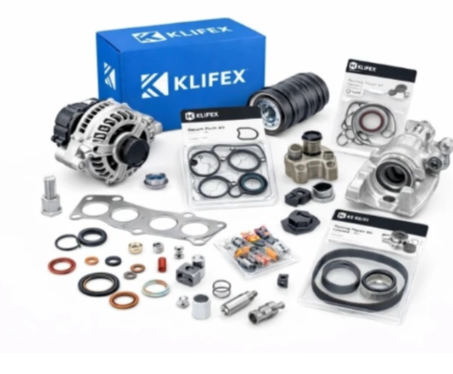
Is replacing a complete car part always the best decision when only one section has failed?
In many repair cases, it is not. A vehicle may show rough running, air leakage, poor ride comfort, weak response, warning lights, or unusual noise because one internal part is worn, cracked, loose, or leaking. Yet, without proper checking, the first repair suggestion may become a costly full replacement.
Repair kits give a more practical answer. They focus on the damaged area, not the entire assembly. This helps drivers control repair costs, reduce waste, and keep working parts in use. More importantly, they support a repair process based on diagnosis, logic, and long-term reliability.
Repair Kits
Repair kits are made to solve specific faults inside larger vehicle systems. They may include seals, valves, flaps, connectors, housings, gaskets, or other small but important parts. When the main unit is still usable, a kit can help restore function without replacing everything around it.
This approach is useful because many car problems begin with a limited failure. A small air leak can disturb engine performance. A weak seal can reduce pressure. A damaged fitting can affect comfort or control. Therefore, repairing the exact fault often makes more sense than changing a complete assembly.
Targeted Repair Logic
A smart repair starts with proper diagnosis. The mechanic should confirm what failed, why it failed, and whether the main part is still safe to use. This step protects the driver from guesswork and helps avoid repeated repairs.
For example, intake-related faults may cause rough idle, poor acceleration, air leakage, or fuel balance issues. In such cases, targeted repair can be more practical than replacing a full intake unit. Readers can review intake repair-kit options through https://klifex.com/de/repair-kits-for-intake-manifolds/ to understand how focused repair parts relate to this type of vehicle problem.
Cost Control
Car repair costs can rise quickly when full replacement becomes the first option. Repair kits help create a better balance between cost and function. They allow the failed section to be addressed while keeping the remaining usable parts in service.
However, the lower price is not the only benefit. The real strength is controlled repair. When the fault is clear, and the kit fits the application, the owner pays for the part that needs attention, not for an entire system that may still have useful life.
Reliable Value
Reliable repair is not about choosing the cheapest path. It is about choosing the correct path. A repair kit can offer strong value when three things are clear: the damaged area is identified, the main component is not beyond repair, and the replacement pieces match the vehicle system.
This also creates better communication between the driver and the mechanic. Instead of hearing only a large repair cost, the driver can understand the exact fault, the repair reason, and the expected result. That clarity builds confidence and makes the decision easier.
System-Specific Repairs
Modern vehicles depend on connected systems. Engine performance, suspension comfort, steering feel, and air control can all be affected by small component failures. Because of this, repair kits are most useful when they are matched to a specific system and installed with care.
Air Suspension Faults
Air suspension problems can affect ride height, road comfort, and vehicle balance. A leak, worn connector, or pressure-related issue may feel serious, but the full system may not always need replacement. A careful inspection can show whether a focused repair is possible.
For readers looking into this repair area, https://klifex.com/de/air-suspension/ can help explain how air suspension-related parts fit into system-level maintenance and fault correction.
Right Repair Choice
Repair kits are valuable, but they are not suitable for every situation. If the main part is badly cracked, heavily corroded, unsafe, badly deformed, or already repaired many times, full replacement may be the safer choice. This is why inspection matters before any decision is made.
When a Kit Makes Sense
A repair kit makes sense when the failure is limited, the vehicle system can be restored safely, and the part condition supports repair. It is also helpful for older vehicles, where complete replacements may be expensive or harder to source.
For mechanics, repair kits can support faster planning, clearer explanations, and better part selection. For drivers, they can reduce stress because the repair feels fair, focused, and easier to understand.
Final Thoughts
Repair kits offer a smarter way to handle many vehicle faults. They help solve the real problem, reduce unnecessary replacement, and protect parts that still work properly. With correct diagnosis, careful fitting, and honest repair judgment, they can support reliable and affordable car repairs.