



Discover how personalized jewelry transforms cherished moments into enduring keepsakes. Learn about fiber laser engraving, metal durability (316L stainless steel vs. 925 silver), photo selection tips, and memorial keepsakes.
Every year, millions of generic gifts end up tucked away in back closets or gathering dust on forgotten shelves. While mass-produced luxury items can impress in the moment, they rarely hold emotional weight over time. Personalized jewelry operates on an entirely different level of human connection. It bridges the gap between fine craftsmanship and intimate storytelling, transforming metal and gemstones into wearable memories that people carry with them every single day.
Whether you are commemorating the birth of a child, celebrating a marriage milestone, or seeking solace during bereavement, custom jewelry offers a tactile permanence that few other physical objects can provide. In this comprehensive guide, we delve into the engineering, emotional resonance, material science, and design essentials needed to choose a bespoke piece that remains beautiful, durable, and deeply meaningful for decades.
1. Why Personalized Jewelry Outlasts Generic Gifts: The Psychology of Sentimental Objects
The human desire to wear meaningful tokens dates back thousands of years—from ancient Roman signet rings bearing family crests to Victorian mourning lockets containing woven locks of hair. In contemporary psychology, this phenomenon is linked to transitional and grounding objects: physical items imbued with personal meaning that provide emotional anchoring, comfort, and a sense of closeness to loved ones.
When an individual receives a customized piece of jewelry, several psychological dynamics take place:
- Demonstrated Investment of Effort: Unlike purchasing an off-the-rack accessory, customizing jewelry requires thoughtful curation—selecting a meaningful date, choosing an intimate photo, or composing an inscription. The recipient instantly recognizes that time and intentional thought went into the creation of the gift.
- Singular Uniqueness: Mass manufacturing produces millions of identical units. A piece etched with a loved one’s portrait, exact geographical coordinates, or handwriting is fundamentally one-of-a-kind.
- Compound Sentimental Value: While most consumer goods depreciate in emotional relevance, personalized jewelry experiences a compounding effect. A necklace worn across multiple life stages becomes inextricably woven into the wearer’s personal identity and family heritage.
2. The Craft Behind Custom Keepsakes: Understanding Modern Engraving & Photo Etching
Not all custom jewelry is created equal. The visual fidelity and lifespan of a personalized piece depend entirely on the technological process used to transfer artwork, typography, or photographic portraits onto the metal surface.
Traditional Mechanical Engraving vs. Fiber Laser Etching
- Diamond-Drag / Rotary Engraving: Traditional methods use a rotating diamond-tipped bit to physically carve grooves into the metal. While excellent for clean line text, monogram initials, and vector shapes, mechanical engraving cannot accurately render complex photographic gradients, micro-textures, or photorealistic facial features.
- Fiber Laser Micro-Etching: High-precision fiber laser systems use focused, high-energy light beams to alter the surface structure and oxidation state of the metal at a microscopic level. By varying pulse frequencies and laser speed, modern fiber lasers create high-density grayscale contrast, capturing fine facial contours, subtle lighting nuances, and intricate textural details.
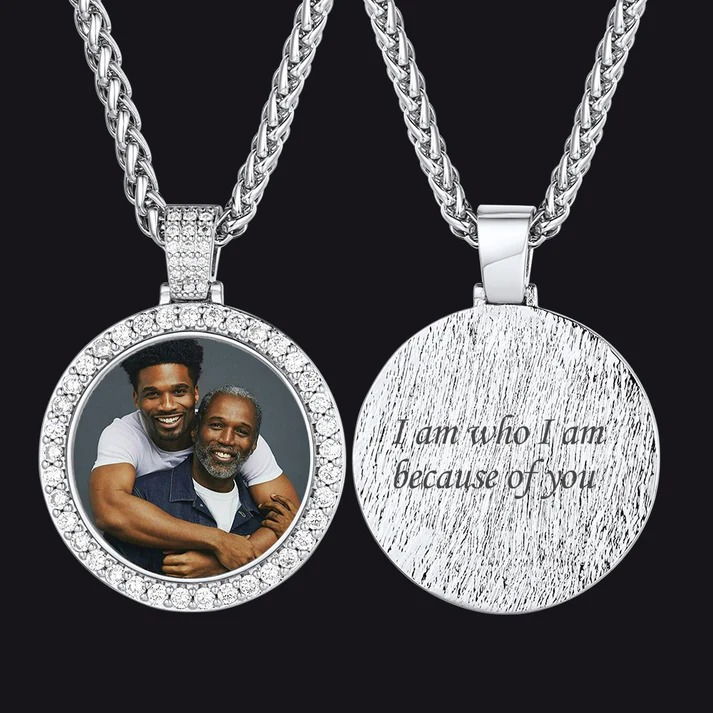
- Color Infusion & Photo Inlays: Some jewelry styles utilize miniature photographic prints protected beneath clear resin, glass cabochons, or synthetic sapphire crystals. While offering vibrant full color, resin can yellow or scuff over time if exposed to harsh UV light or chemicals, making metal-etched pieces the preferred choice for lifelong durability.
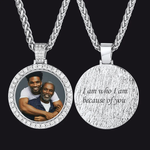
When shopping for a photo necklace, verifying the engraving methodology is critical. High-resolution laser etching directly into surgical-grade metal ensures that the image will never peel, fade, chip, or blur with daily skin contact and regular washing.
3. Materials Science: Choosing Metals That Resist Tarnish, Sweat, and Daily Wear
Because personalized jewelry is designed to be worn continuously rather than saved exclusively for formal events, material composition is paramount. The table below outlines the core metallurgy options used in modern custom jewelry:
| Metal / Alloy | Hardness (Mohs Scale) | Tarnish & Corrosion Resistance | Water & Sweat Safety | Hypoallergenic Grade | Ideal Use Case |
|---|---|---|---|---|---|
| 316L Surgical Stainless Steel | 5.5 – 6.0 | Exceptional (No rust, no patina) | 100% Waterproof | High (Bio-compatible) | Daily heavy wear, sports, memorial rosaries, dog tags |
| 925 Sterling Silver | 2.5 – 3.0 | Moderate (Requires periodic polishing) | Sensitive to chlorine/sulfur | Moderate (Trace copper) | Classic heirloom pendants, formal lockets |
| 14K / 18K Solid Gold | 2.5 – 3.5 | Excellent (No tarnish) | High | Excellent | High-end luxury jewelry, heirloom gifts |
| PVD / Ion-Plated Steel (Gold/Black) | 5.5 – 6.0 | Superior (Vacuum-bonded layer) | High (Resistant to abrasion) | High | Modern colored finishes with heavy durability |
| Brass / Zinc Alloys (Base Metal) | 3.0 – 3.5 | Poor (Prone to oxidation and greening) | Low (Degrades quickly) | Low (Nickel risk) | Budget fast-fashion items only |
Why 316L Stainless Steel Is the Modern Standard for Commemorative Jewelry
316L stainless steel contains an addition of molybdenum, giving it vastly superior corrosion resistance compared to standard grade 304 steel. It resists salt water, bodily sweat, soaps, and environmental humidity without tarnishing or turning skin green. Furthermore, because of its structural hardness, laser-etched portraits and text maintain sharp contrast indefinitely without wearing smooth from friction against clothing.
For gold, rose gold, or black finishes, look for Physical Vapor Deposition (PVD) coating or Ion Plating (IP). Unlike traditional electroplating—which leaves a delicate micro-thin foil that can flake off—PVD vaporizes the coating metal in a vacuum chamber, molecularly bonding it to the stainless steel core.
4. The Masterclass in Image Selection: How to Prepare the Perfect Photo for Metal Engraving
A laser engraving can only be as sharp as the reference file provided. To ensure your custom jewelry turns out crisp, lifelike, and striking, follow these essential image preparation guidelines:
1. High Contrast & Distinct Lighting
Laser etching interprets brightness values as surface reflections. Photos with clear highlights on the face and rich shadow separation in the background render with dramatic clarity. Avoid flat, overexposed, or heavily filtered photos where facial boundaries bleed into the backdrop.
2. Close-Up Framing (Single or Dual Subjects)
Pendants typically range from 15mm to 35mm in diameter. Group photos containing multiple people force individual faces down to sub-millimeter scales, causing fine features like eyes, smiles, and eyelashes to lose definition. Opt for tight portrait crops focusing on the head and shoulders.
3. Resolution & File Quality
- Minimum Resolution: 1000 x 1000 pixels (300 DPI recommended).
- Source Files: Always upload the original image file directly from your camera roll or high-res scan. Avoid screenshots from social media or compressed chat apps, which introduce digital compression artifacts that the laser can mistake for surface texture.
4. Working with Vintage or Restored Family Photos
If you are etching a vintage, black-and-white, or historical photograph of a grandparent or ancestor:
- Use a flatbed scanner at 600+ DPI rather than taking a smartphone snapshot of a glossy print (which introduces lens glare and distortion).
- Slightly boost the midtone contrast and sharpening before uploading to ensure the vintage grain translates cleanly onto the metallic canvas.
5. Occasion-Specific Gifting Guide & Meaningful Customizations
Personalized jewelry adapts effortlessly across the spectrum of human emotion, from joyful celebrations to quiet remembrance:
- New Parents & Maternal Celebrations: Engraving an ultrasound capture, newborn portrait, or actual baby footprint onto a polished pendant creates an unforgettable Mother’s Day or push present. Adding the child’s birth date, time, and birth weight on the reverse side turns the piece into a comprehensive family chronicle.
- Romantic Milestones & Anniversaries: Move beyond simple initials by incorporating meaningful coordinates (where you first met or exchanged vows), soundwave etchings of a voice saying “I love you,” or matching split-heart pendants.
- Graduations & Career Achievements: For young adults stepping into new chapters, engraved motivational mantras, graduation dates, or Roman numeral milestones provide a grounding compass of confidence and family pride.
- Men’s Custom Keepsakes: Modern men’s jewelry favors rugged, clean lines—such as heavy Miami Cuban link chains with engraved ID plates, beveled dog tag pendants with laser-etched photos, or Viking-inspired rune medals that balance masculine style with deep personal sentiment.
6. Sacred Devotion & Bereavement: Memorial Jewelry as an Enduring Touchstone
One of the most profound uses of personalized jewelry is navigating grief and remembering those who have passed away. When mourning the loss of a parent, spouse, child, or close friend, physical presence is suddenly replaced by memory. A commemorative keepsake acts as a tangible point of contact, offering profound psychological comfort during quiet moments of prayer, reflection, or daily routine.
For individuals who draw strength from spiritual and religious traditions, combining devotion with personal remembrance creates a sacred keepsake. A memorial rosary with photo bridges these two realms seamlessly. By integrating a laser-etched portrait medal directly into a traditional devotional rosary or cross centerpiece, the wearer is able to hold their loved one’s memory close while engaging in daily prayer and contemplation.
Bereavement Gifting Etiquette
If you are offering a personalized memorial piece to a grieving friend or family member:
- Choose Dignified, Enduring Materials: Bereavement gifts should be constructed from robust metals like 316L stainless steel so the recipient never has to worry about water damage, tarnish, or fragile links breaking during daily wear.
- Include a Handwritten Note: Accompany the jewelry with a personal card mentioning a fond memory of the deceased. Explain why you chose that particular image or inscription.
- Respect Timing: Memorial jewelry is deeply appreciated both immediately following a memorial service and during challenging anniversaries, holidays, or birthdays when grief often resurfaces.
7. Chain Selection, Sizing, and Layering Guidelines
A pendant is only as secure and stylish as the chain supporting it. Choosing the right chain style and length ensures comfortable wear and visual harmony:
- Rolo & Cable Chains: Classic round or oval interlocking links that offer great flexibility and subtle elegance, ideal for delicate round, heart, or oval pendants (1.5mm – 2.5mm width).
- Box Chains: Square-shaped geometric links known for high tensile strength and a sleek, modern finish, pairing perfectly with minimalist bars and modern pendants.
- Cuban Link Chains: Flat-interlocking curved links that exude bold, timeless style. Thicker Cuban chains (4mm – 9mm) provide an exceptional masculine foundation for heavy dog tags and shield medals.
- Wheat (Spiga) Chains: Four-strand braided links that deliver maximum durability and resistance to kinking, ideal for pieces worn during physical activity or sleep.
Recommended Chain Lengths
- 18 Inches (45 cm): Sits at the collarbone; standard feminine length for showcasing pendants above open necklines.
- 20–22 Inches (50–55 cm): Sits below the collarbone; the most versatile universal length for men and women, easily tucked under shirts or worn over crew necks.
- 24 Inches (60 cm): Sits mid-chest; ideal for larger memorial pendants, dog tags, and rosary centerpieces.
8. How to Clean and Care for Laser-Engraved Jewelry
Maintaining the pristine brilliance of your personalized jewelry requires minimal effort when crafted from high-grade materials:
- Gentle Cleaning Routine: Mix a few drops of mild dish soap into warm water. Soak the jewelry for 5 to 10 minutes, then use an ultra-soft microfiber cloth or soft-bristled toothbrush to gently clean the engraving grooves and chain links.
- Rinse & Dry Thoroughly: Rinse with clean lukewarm water and pat dry immediately with a lint-free polishing cloth.
- Avoid Abrasive Cleaners: Never use harsh chemical jewelry dips, chlorine bleach, or abrasive scouring pastes on laser-etched pieces, as strong abrasives can dull the delicate microscopic contrast of the photo engraving.
- Ultrasonic Cleaners: While 316L stainless steel and solid gold are safe for ultrasonic cleaning baths, avoid placing pieces with glued gemstones or resin coatings in ultrasonic machines.
9. Frequently Asked Questions (FAQ)
Do laser-etched photo necklaces fade over time?
No. High-quality fiber laser etching permanently alters the micro-structure of the metal surface. Because the image is physically part of the metal rather than printed ink or a glued sticker, it cannot wash off, peel, or fade under normal daily wear.
Can I wear my stainless steel personalized jewelry in the shower or gym?
Yes. Pieces crafted from 316L surgical stainless steel are completely waterproof, sweat-proof, and rust-resistant. They do not react with fresh water or everyday body soaps. However, it is advisable to rinse the piece with fresh water after swimming in heavily chlorinated pools or ocean salt water to preserve optimal surface shine.
What is the best pendant shape for photo engraving?
- Dog Tag / Rectangle: Best for full portraits, standing photos, or images with detailed backgrounds.
- Round / Oval: Timeless and versatile; ideal for close-up headshots and portrait crops.
- Heart: Best for romantic couples, mother-child portraits, and sentimental anniversary gifts.
- Shield / Medallion: Excellent for masculine styling, protective religious emblems, and memorial keepsakes.
How do I ensure text on the back of the pendant is easy to read?
Keep inscriptions concise. For a standard 25mm pendant, 2 to 3 lines of text with 15–20 characters per line ensure large, highly legible font sizes. Choose clean serif or sans-serif typography for maximum readability.
10. Summary: Choosing Keepsakes That Speak to the Heart
Jewelry has always been a reflection of human value. But when that jewelry is engraved with a cherished face, a vital date, or a sacred symbol of faith, it transcends ordinary fashion. It becomes an intimate storybook worn close to the heart—a daily reminder of the bonds, milestones, and memories that truly matter. By pairing thoughtful design with enduring materials like 316L surgical stainless steel and high-precision fiber laser craftsmanship, you create a timeless heirloom capable of inspiring joy and comfort across a lifetime.