







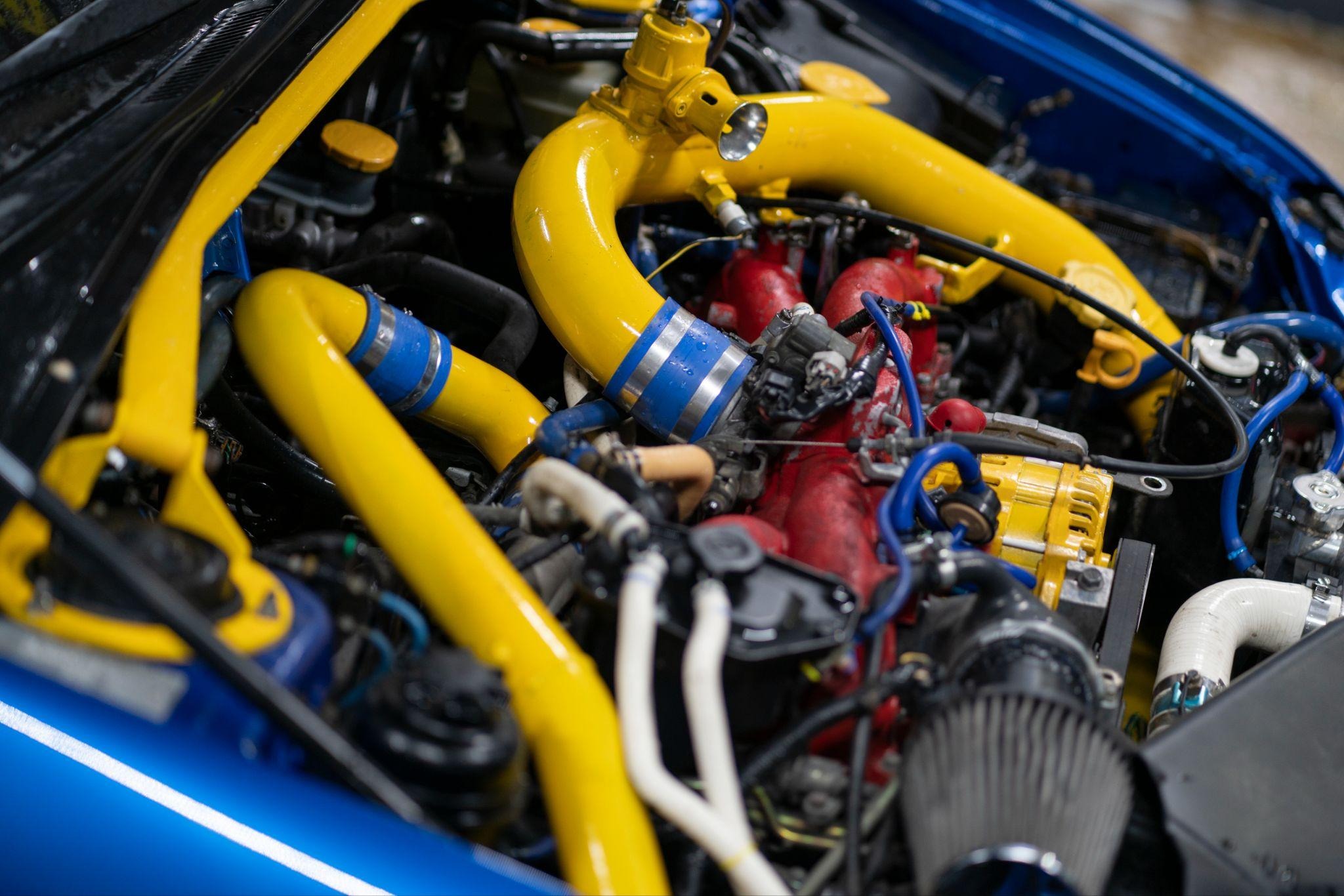
A friend of mine dropped an RB25DET into a 1991 240SX in his apartment complex parking lot over the course of three weekends. No lift. A harbor freight jack, two stands, and a borrowed engine hoist. The car ran. It passed inspection in Virginia. He daily-drove it for four years. That story is not unusual. Variations of it play out in every state, in every season, because Nissan built a range of engines in the 1990s and 2000s that happen to be almost perfectly suited for the American import-and-swap ecosystem. Affordable, compact enough to fit common chassis, well-supported by aftermarket parts manufacturers, and available in large quantities from Japanese exporters. No other manufacturer’s JDM catalog occupies that same intersection quite as cleanly.
Trace the demand back to platform compatibility
The 240SX is the entry point for the majority of Nissan JDM engine purchases in North America. Nissan sold the S13 and S14 chassis with the KA24DE in the U.S. market, a reliable but uninspiring 2.4-liter four-cylinder. In Japan, the same chassis received the SR20DET, a turbocharged 2.0-liter producing between 205 and 250 horsepower depending on the generation. The engine bay dimensions are nearly identical. The motor mount locations line up. The transmission bolt pattern matches if you source the correct SR20 gearbox alongside the engine. This compatibility wasn’t a coincidence of aftermarket engineering. It was a consequence of Nissan using the same S-platform globally with different powertrains for different markets.
That ease of installation created a snowball effect. As more SR20 swaps succeeded, more tutorials appeared. More shops gained experience with the platform. More importers stocked the engine because demand was predictable. Browsing a Nissan JDM engine selection today reveals inventory levels that reflect two decades of accumulated swap culture. The SR20DET remains one of the most frequently imported JDM engines in the country, and supply from Japanese auction houses shows no signs of drying up because the Silvia platform sold in enormous numbers across multiple generations in Japan.
Scale up to the inline-six market
Where Toyota’s JDM reputation concentrates heavily around the 2JZ, Nissan spreads its inline-six legacy across three distinct families that each serve different segments of the swap market. The RB20DET, a 2.0-liter turbo six from the R32 Skyline and Cefiro A31, offers the lowest entry cost. Engines pull between $1,500 and $2,500 with a turbo and accessories. Power output on stock internals tops out around 300 horsepower with basic bolt-on modifications and a tune through Nistune or an aftermarket ECU like the Link G4X.
The RB25DET steps up to 2.5 liters and a stronger bottom end. Found in the R33 Skyline, Stagea, and Laurel, this engine handles 350 to 400 horsepower on the factory block with upgraded fuel system and turbo. Its torque curve better suits heavier chassis swaps, including the increasingly popular Z32 300ZX conversions where the stock VG30 twin-turbo has aged out of practical serviceability for many owners.
Then the RB26DETT. The GT-R engine. Twin turbocharged from the factory, individual throttle bodies, and a bottom end that professional drag racing teams have pushed past 1,000 horsepower on stock cranks. The 25-year import rule has steadily opened up R32 GT-R engines to legal U.S. import since 2014, and R33 units began entering that window in 2020. Prices have climbed accordingly. What sold for $3,500 in 2016 now commands $6,000 to $9,000 depending on condition and documentation. But the performance ceiling justifies the premium for builders targeting serious power numbers.
Account for the VQ family’s growing role
The conversation around Nissan JDM engines tends to center on turbocharged four-cylinders and inline-sixes, but the VQ series V6 has quietly become one of the most practically important import engines in the market. The VQ35DE, produced in staggering volume for the Skyline V35, Fairlady Z33, Stagea M35, and multiple Infiniti models, is one of the most commonly needed replacement engines for Nissan and Infiniti owners in the United States. The domestic used engine supply for the VQ35 has tightened as these vehicles age into the 15-to-20-year bracket where major engine failure becomes statistically likely.
JDM-sourced VQ35 engines arrive with notably lower mileage than domestic salvage equivalents because the Japanese market retired these vehicles earlier. A VQ35DE from a Japanese-spec V35 Skyline with 55,000 kilometers costs less than a domestic salvage unit pulled from a 150,000-mile Altima, and the lower-mileage unit typically shows better compression numbers and less timing chain stretch. For the independent shop replacing a blown motor in a customer’s G35 or 350Z, the JDM unit is often both cheaper and higher quality than the domestic alternative. Ward’s Auto recognized the VQ series on its annual Ten Best Engines list for fourteen consecutive years, and that engineering quality holds up in the imported units.
Evaluate the aftermarket support ecosystem
An engine is only as useful as the parts available to install, maintain, and modify it. Nissan’s JDM lineup benefits from one of the deepest aftermarket support networks of any import platform. Tomei, HKS, and GReddy built their reputations on SR and RB development. Garrett and BorgWarner supply turbo upgrades in every size bracket. Wiring Specialties manufactures plug-and-play harnesses specifically for SR20 and RB swaps into 240SX and Z chassis. ISR Performance, Sikky Manufacturing, and CXRacing produce swap-specific motor mount kits, downpipes, and intercooler setups that reduce fabrication time from weeks to hours.
This ecosystem matters because it lowers the total cost of ownership beyond the initial engine purchase. When a turbo oil line cracks on an SR20DET at 9 PM on a Wednesday, the replacement part ships next-day from three different vendors. Try sourcing a turbo oil feed fitting for a Mitsubishi 4G63 from an imported Galant VR4 with the same urgency. The parts exist, but the supply chain operates at a fraction of the speed and depth. Nissan’s aftermarket advantage isn’t about having the best engines in absolute engineering terms. It’s about having the most serviceable ones within the JDM import context.
Nissan did not design any of these engines for the American swap market. The SR20DET was built for Japanese and European Silvias. The RB series powered Skylines sold in markets where right-hand-drive was standard. The VQ family was an economy of scale play across Nissan’s global lineup. But the combination of physical compatibility with U.S.-market chassis, strong factory engineering, accessible pricing from Japanese surplus, and deep aftermarket support created something larger than any single product decision intended. Twenty-five years after the first SR20 landed in an American 240SX, Nissan’s JDM engine catalog remains the most active segment of the import powertrain market. The reasons for that aren’t going away.